Meet Helina Metaferia: The Artist Who Makes Black and Brown Women Impossible to Overlook
In By Way of Revolution, archival memory and lived experience converge to create monumental portraits that honor generations of resistance and imagine freer futures.
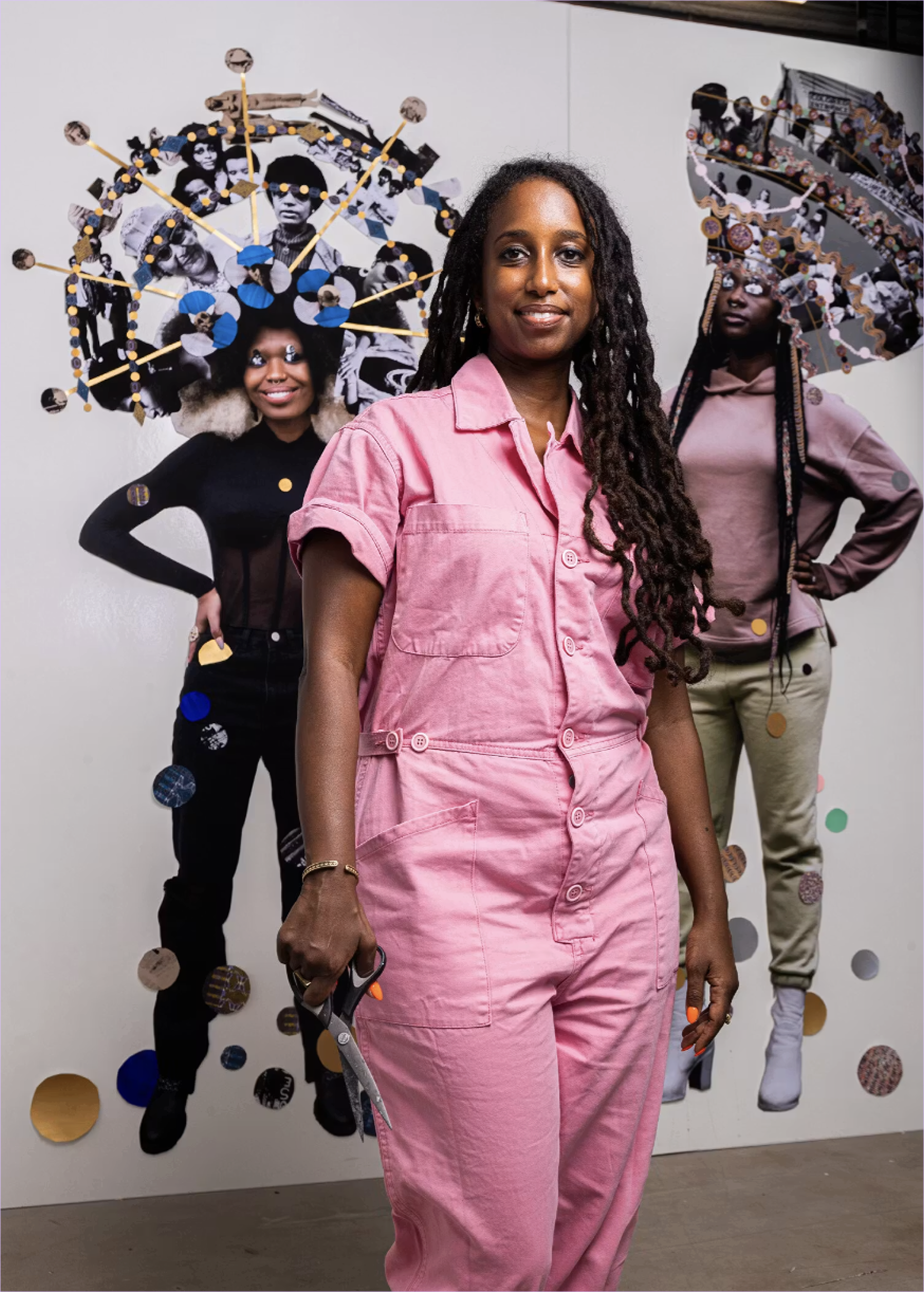
Before becoming murals towering over city streets, interdisciplinary artist Helina Metaferia’s work begins in moments of intimacy; facilitated spaces for women and femmes sharing stories and imagining futures beyond oppression. Her project, By Way of Revolution, transforms those moments of collective care into public monuments, weaving together personal archives, protest histories, and the lived experiences of Black and Brown communities.
Born from the artist’s processing of her mother’s legacy as a Pan-African activist, the series uses performance, workshops, and collage to bridge histories of protest with the lived experiences of today. Central to this project are its subjects, specifically community participants like Nashel Brantley and Karla Cruz, whose own stories of vulnerability and healing anchor the murals.
Six months after By Way of Revolution transformed a Newark streetscape, FEMINIST met with Metaferia to reflect on the project. In our conversation, she explores the relationship between protest archives and personal memory, the trust required to turn vulnerability into public art, and what it means to make Black and Brown women impossible to overlook.
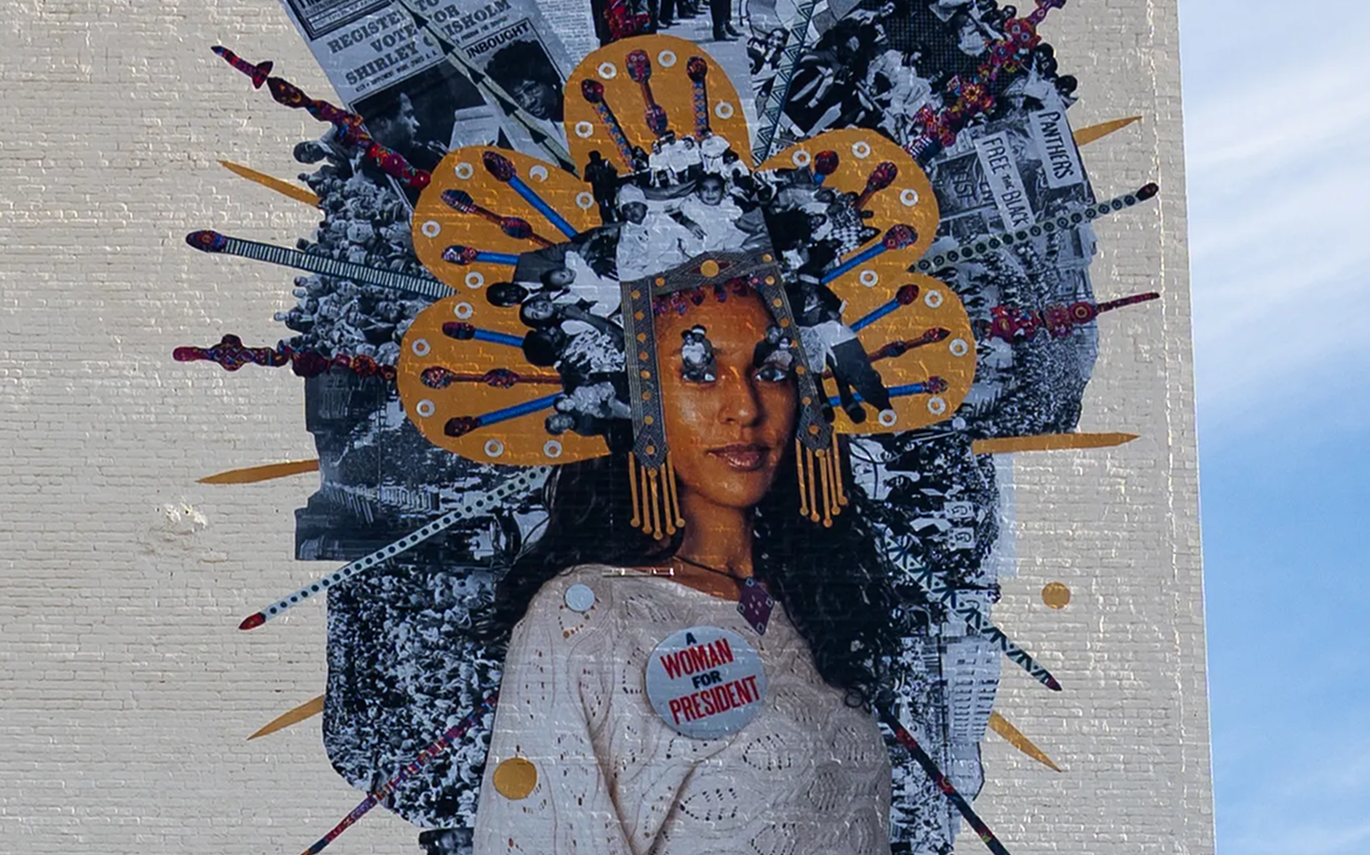
Your By Way of Revolution series brings together archival research and lived, contemporary experience. What role did Newark’s activist history play in how these murals came together?
By Way of Revolution is a traveling project that brings together the images and stories of community residents, and collages them with protest archives from local public libraries, excavating the often under-recognized labor of women of color in activist movements over generations. This process always begins with site-specific community engagement. First, I facilitate a performance-as-protest workshop for people who identify as femme, women, or gender non-conforming, and also Black, Indigenous, People of Color. Afterwards I create photographic portraits of each participant, and interview them about their heritage, and the social movements they identify with. I then research these histories in libraries local to the site of the mural.
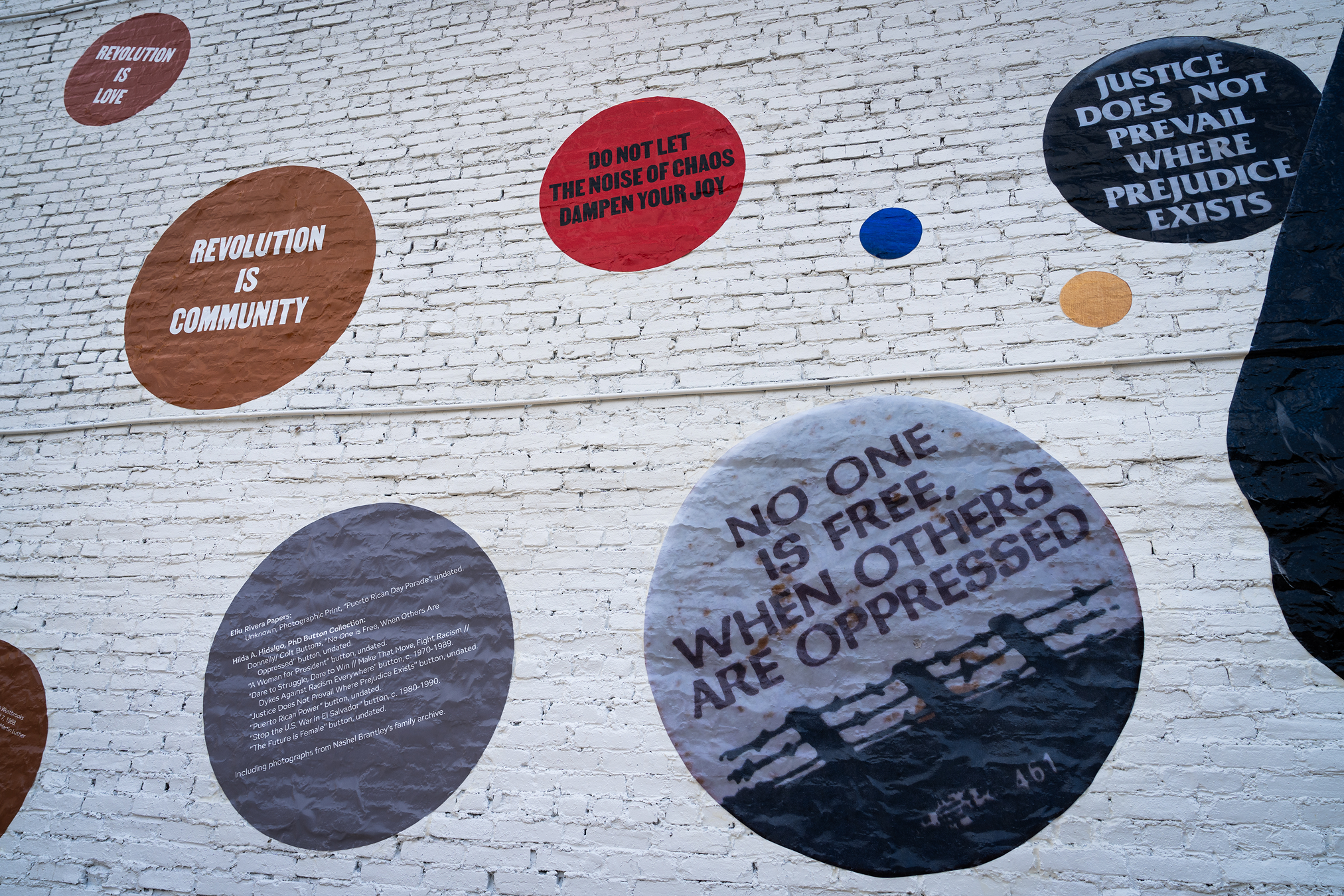
For the Newark murals, I spent time researching in the Newark Public Library special collections on activist history, particularly the archives of Hilda Hidalgo, who was a Puerto Rican feminist leader and community organizer in New Jersey. A lot of the anti-racism and anti-war protest buttons used in local protests that are in the mural came from her archive. I also sourced archives from the collection of Anto Smith, who was active in the Black Panther Party in the 1960’s and 70’s, and the Newark Broadsides Collection, which includes cultural, political, and social history through old flyers and notices. There is a complete bibliography of source material for each of the mural collages.

The workshop you led centered on care, resilience, and collective reflection. How did those intimate, embodied moments translate into such large-scale public works?
Communal care is a value I learned at home, as I come from a lineage of liberation workers and educators. My mother was president of an Ethiopian women’s rights organization and a feminist activist for over 40 years before she passed away, so movement-work and workshop facilitation comes very natural to me. All artists need fuel for their work, and these shared moments of dreaming about liberation and freedom with people I build community with have become one of my sources of inspiration.
My workshops are public programs hosted by an organization or institution that have invited me to do this work, and anyone who identifies as a woman of color can sign up to attend the workshop. However, once we begin it becomes a private experience, away from cameras and documentation. This allows me to support an environment where we can share freely, while engaging in mindfulness and movement that echo histories of resilience workers. It’s a place where people become vulnerable and build trust with one another, and I take the responsibility to hold that space very seriously.
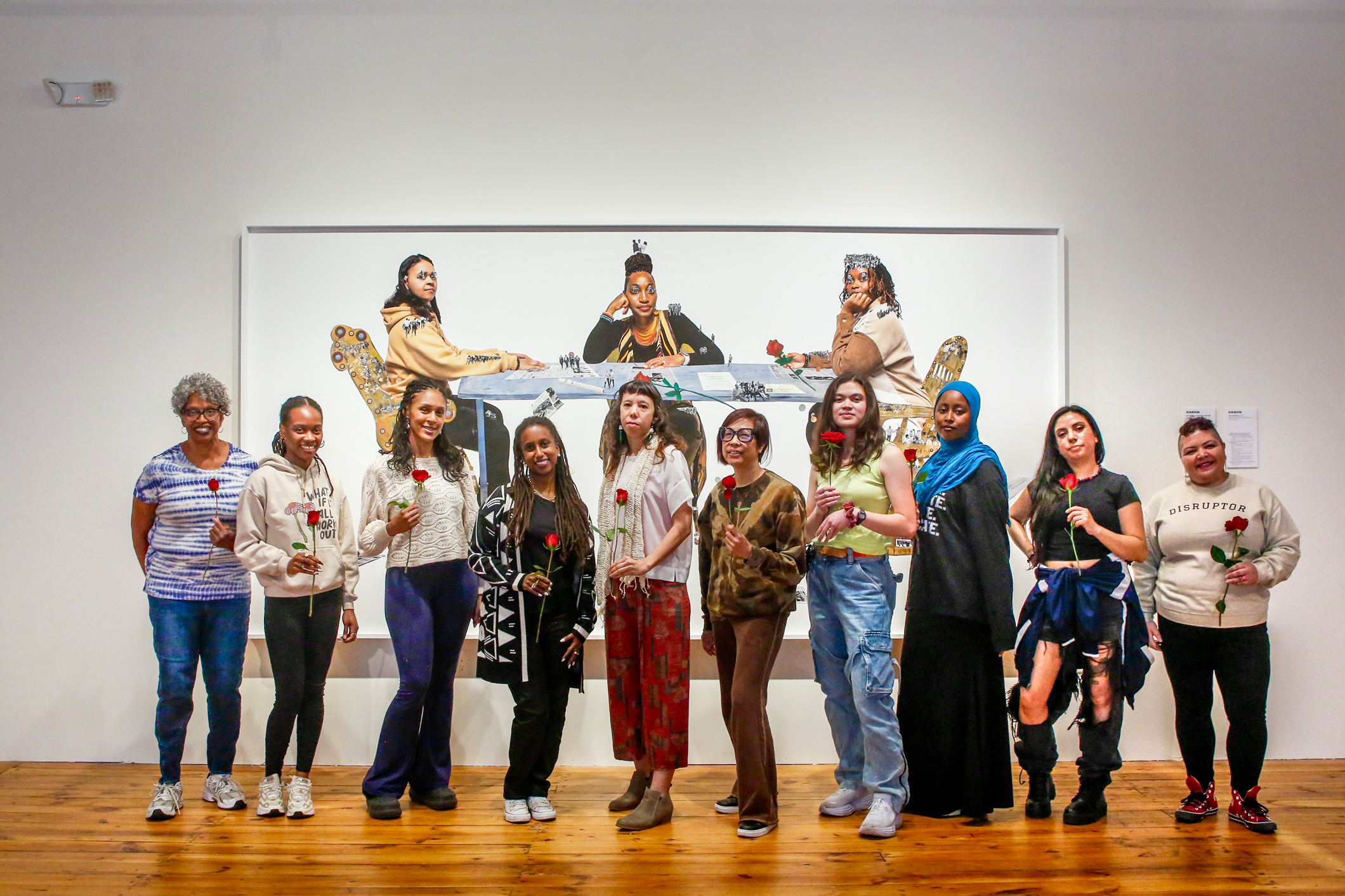
Scaling up this intimate, private workshop experience to these larger than life murals is a trust fall between the participants and myself as the artist. The entire process is about reclaiming our bodies, stories, and ancestral legacies to overcome the shadows of systemic violence and oppression. It’s about authenticity, audacity, boldness, and courage as a methodology for survival. The participants engaged with this bravery from the beginning in signing up for the workshop, to the end result of a huge mural. They didn’t see the artwork until the mural was unveiled in a huge ceremony. Thankfully the reactions were incredibly positive, and their family and loved ones surrounded them during the ceremony.
Nashel Brantley and Karla Cruz describe both vulnerability and healing in being part of this process – did collaborating this closely change how you think about your role or responsibility as an artist?
I have always thought of being an artist as being of service to society by helping shape our cultural and political imagination. There is incredible power in envisioning possibilities for what the world could be through art, and bringing that to life. I’ve always wanted that journey to be one of empowerment, where I share my platform and amplify others, and where people can collaborate with the work to discover their own experiences through the structures that I design and facilitate. The process and ethics of doing the work is as much a part of the practice as the final art objects that are constructed.
All of this is a responsibility that I take seriously, but I also have a whole lot of fun and play as a creative person. In my studio I’m listening to comedy skits, playing lots of music, messing with art materials, and cutting up images to make something new. I enjoy every moment of what I do, and for this I am grateful. I’m essentially the same kid who liked to scribble on the walls with crayons, now I just have bigger walls to make art on, and fancier tools to make art with.

The murals weave together protest imagery from groups like the Black Panthers and Young Lords with family photographs. What does that interplay between the archival and the personal allow you to express?
I love the feminist slogan that the personal is political, because it’s true. While we all have some agency, our bodies, our relationships, our domestic lives, our careers, and our experiences are all connected to power dynamics and systems outside of ourselves. I bring in the personal via the images of the participant’s bodies and their family archives and combine this with images of political movements to show the connection between our interior lives and the public world. It’s a dance that we do everyday.
I’m also interested in the different tiers of ancestors that we carry with us, specifically our familial, artistic, and political ancestors. Understanding and reconciling with our personal and social histories empowers our existence and helps us navigate difficult terrains and injustices. I personally acknowledge each of these figures in my own life, and my knowledge of and connection to them helps support me on a daily basis.
You’ve spoken about the urgency of uplifting Black and Brown women “bolder, louder, and fiercer than ever.” What do you hope someone walking past these murals takes away, especially in this current political moment?
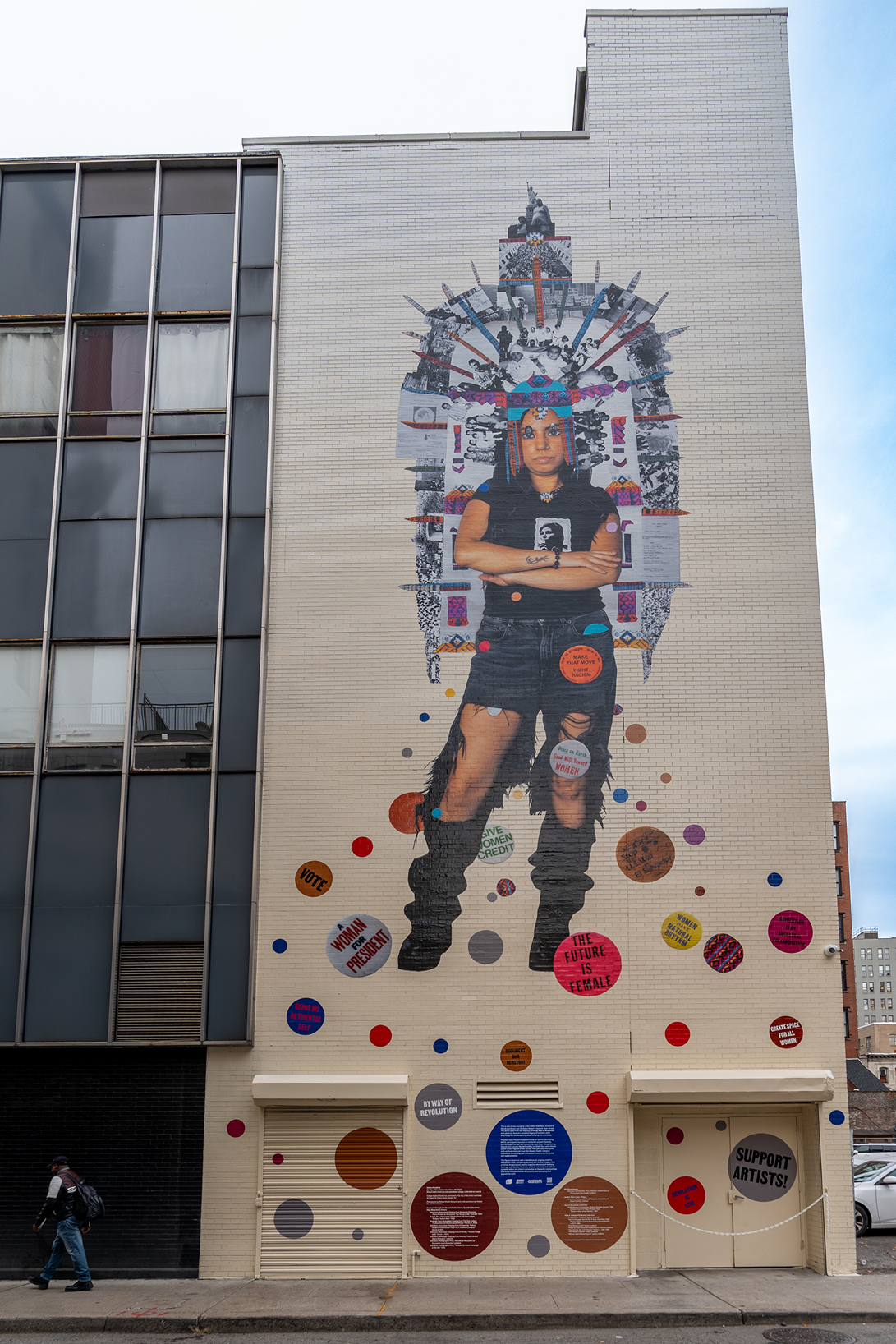
My work is rooted at the intersection of visual art, performance, community engagement, and psychosomatics. I’m always interested in the methods of bodily activation that I can employ in an unexpecting audience when they encounter my work. The scale of the murals requires you to physically step back to take in this larger than life photograph of a woman looking fiercely ahead, adorned with a connection to history, family and community. That gesture of stepping back that you take as a viewer is one that incites a level of consideration of your body in relation to the art, in relation to the representation of a woman of color. I’m hoping that people of different genders, ethnicities, and backgrounds can have this visceral experience, and that it eventually translates into greeting the subjects with some curiosity at the least, and at best respect. One thing is for sure – a woman at that scale can’t be ignored or made small.
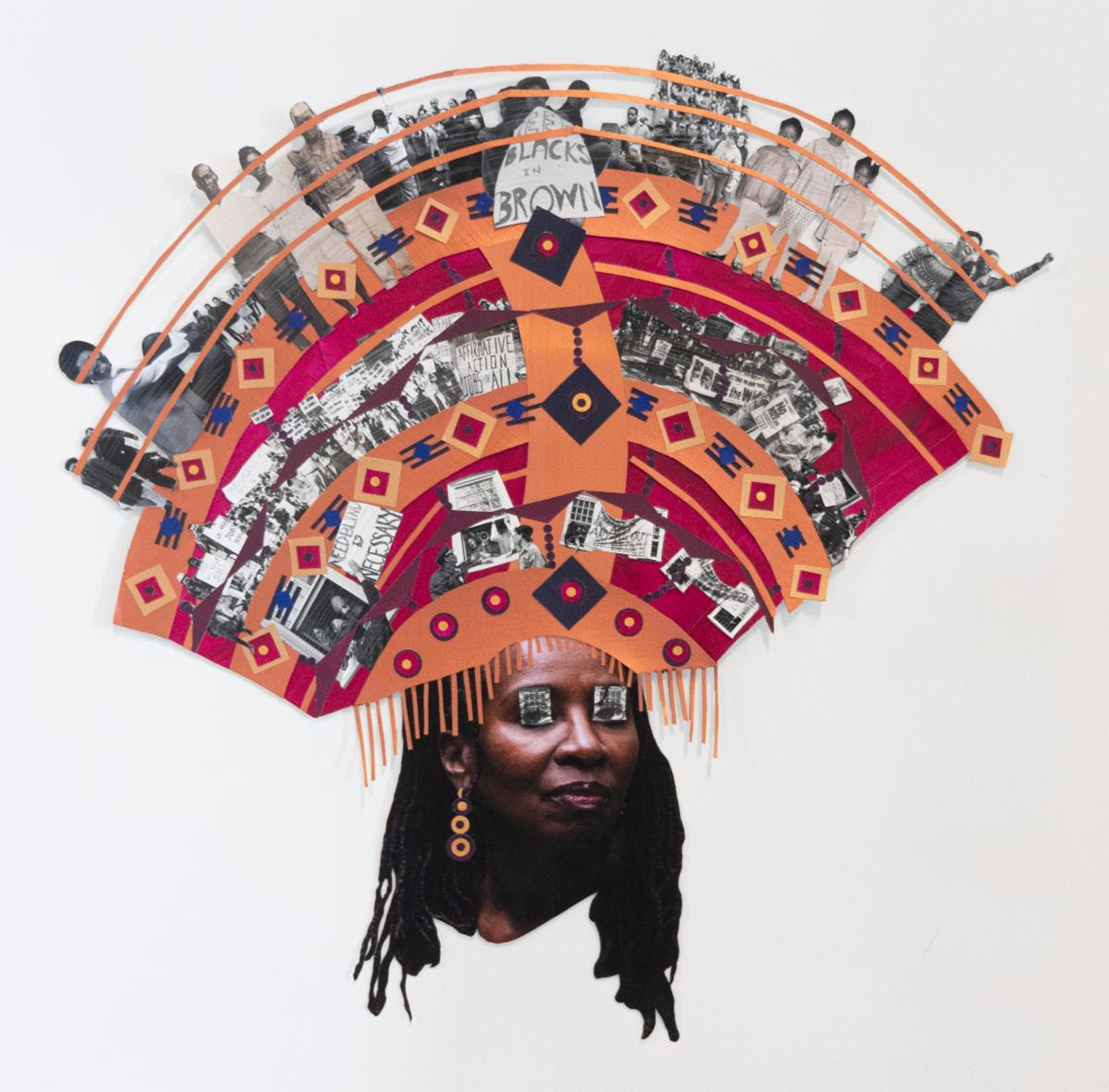
My work is also informed by a study of traditional Ethiopian art practices from my own heritage, where visual art serves as a spiritual medicine. In these traditions, headdresses and royal regalia are also used as anti-colonial and Pan-African motifs of liberation. In this way, I am interested in my work being a form of visual affirmation.
If a Black or Brown woman walks past my mural and their head lifts a little higher, their spine lengthens, their chest expands, and they walk with a bit more swag in their step, I’ve done my job. With all the dark hardships occurring in our world right now, we need moments of celebration, joy, and light. We need to feel seen, and appreciated. While these murals are specifically of Natasha Brantley and Karla Cruz, they are a signifier to every woman of color who walks by to be unapologetically themselves, and to be free.