Meet Abir Al-Sahlani: The MEP Going Viral for Her Takedown of Far-Right Politics in Europe
As far-right politics gain ground in Europe, she’s challenging racism, sexism, and the global backlash against women’s rights.
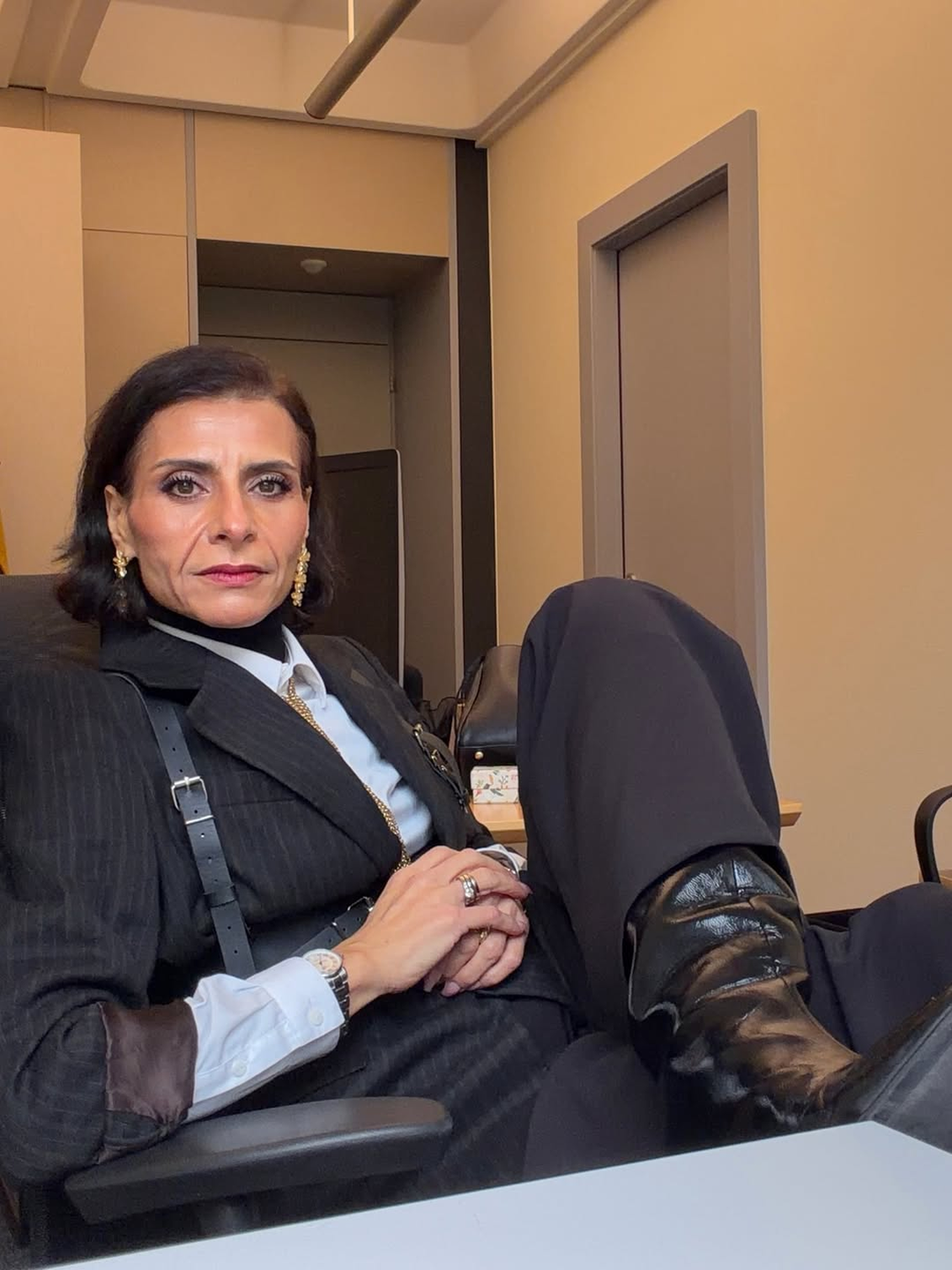
You may recognize Abir Al-Sahlani from your Instagram feed. Speeches from the Member of the European Parliament have gone viral for confronting the racism and sexism the far right has brought into European politics. Her words, billowing through phone screens as they do across the parliamentary floor, capture the fury of millions of women across Europe and beyond. Her delivery is formidable, and the world is listening.
In the European Parliament, Al-Sahlani represents the Swedish Centre Party in the Renew Europe group. She works on women’s rights, democracy, and the rule of law, and is a leading voice in the European Parliament on gender equality and sexual and reproductive health and rights.
Born into a political family in Iraq, she grew up in exile under several authoritarian regimes after her father was imprisoned in Abu Ghraib. She later found refuge in Sweden, where she entered politics. Her work today focuses on defending democracy, countering the global backlash against women’s rights, and strengthening gender equality across Europe.
FEMINIST had the opportunity to speak with Abir about her politics, the growing influence of MAGA-style far-right movements in Europe, and what’s at stake for women’s rights in this political moment.
What does feminism mean to you?
For me feminism is about freedom, equality before the law and power over our own bodies. It is the desire to give every woman and girl the same rights, opportunities and safety as men.
But it’s also about democracy. When half of the population still faces discrimination, violence and are not allowed to make decisions about their own bodies. That is not real democracy.
We are living through a global backlash against women’s rights. Across continents we see the same pattern: attacks on reproductive rights, glorification of outdated gender roles and the normalisation of misogyny in politics.
One principle is non-negotiable for me: Women’s bodies are not battlefields for ideology or religion. Our wombs are nobody’s business but our own.
You were born in Iraq, and your father was imprisoned in Abu Ghraib before you later found refuge in Sweden. How has this lived experience shaped your politics today?
I did not grow up inside Iraq, but in exile, under several other authoritarian regimes that shaped my understanding of power very early.
My father’s imprisonment left a deep mark on our family. Living under authoritarian systems teaches you quickly what happens when institutions collapse, and power goes unchecked.
Arriving in Sweden as a refugee showed me the opposite: what democracy and functioning institutions can give. So, my politics has always been shaped by that contrast. To me, democracy and human rights are not abstract ideas but the difference between freedom and oppression.
And I know very well that rights are fragile. They can disappear much faster than people think.
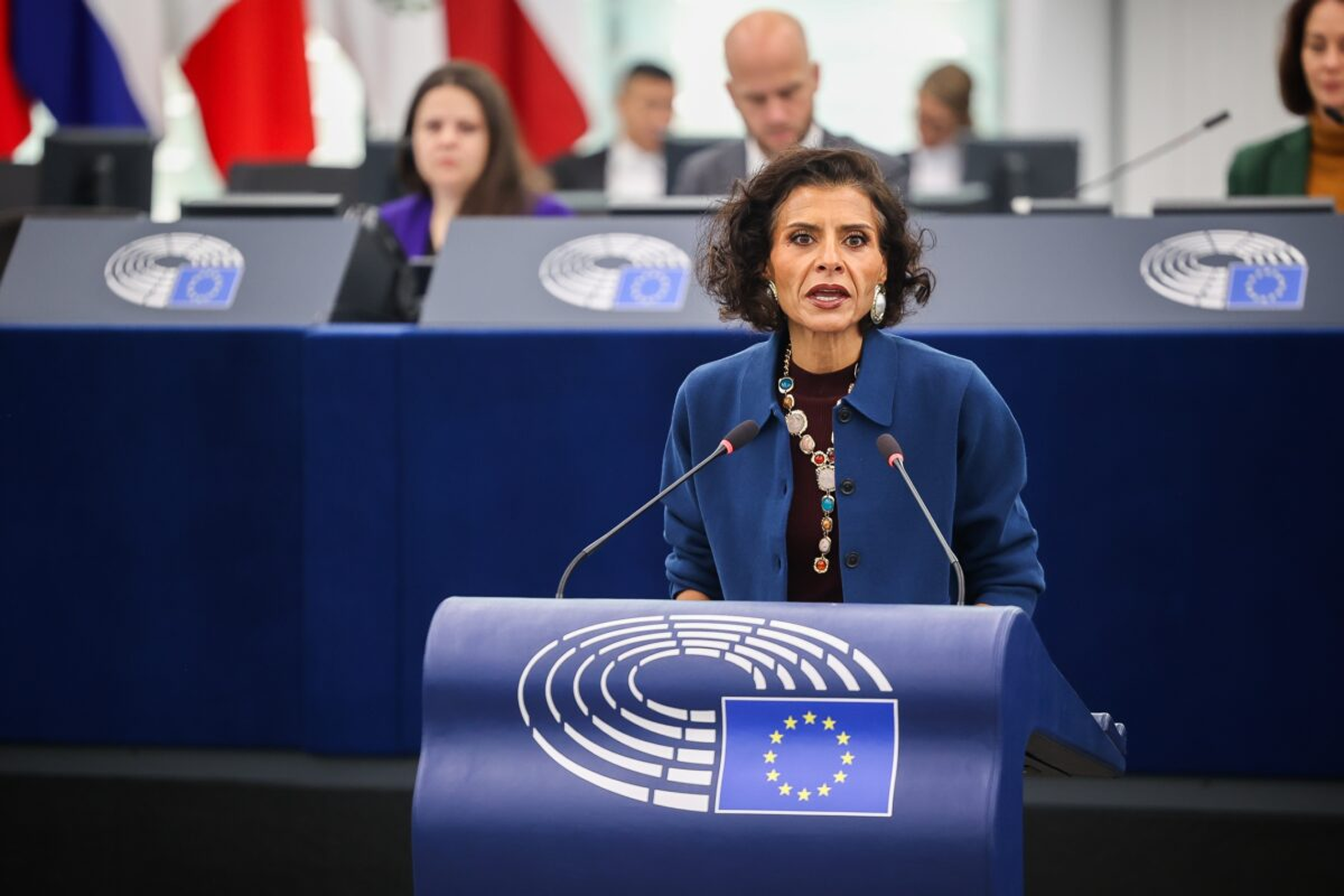
During a European Parliament debate, you stated that gender-based violence is a “man problem” and emphasized that EU data shows sexual violence is committed by EU nationals and men known to women in their own homes. That moment went viral. What has the response been since? As someone who bridges lived experience as both a refugee and a feminist advocate, how do you continue counter this dangerous narrative in parliamentary spaces?
The reaction showed exactly why the conversation was necessary. Many women recognised the truth immediately because it reflects their lived reality.
The data is very clear: most sexual violence is committed by men, and most often by men from their own social circles. Yet in political debates, violence against women is often instrumentalised to attack migrants.
Honestly, the weaponisation of women’s pain to serve political agendas is beyond horrible. Violence against women is a serious problem and we must address the root causes: patriarchy, gender inequality and weak legal protection.
Research shows that far-right rhetoric on women’s rights acts as a distraction from the persistent issues that Europe faces—including the gender pay gap, abortion restrictions, and alarming numbers of femicides. What concrete harms are you seeing far-right policies and rhetoric inflict on women and girls across Europe?
The truth is that this is a coordinated international backlash against gender equality, heavily inspired by the MAGA movement.
Girls and women are increasingly attacked and threatened online. Their bodies are sexualised using AI, sometimes for extortion or to silence them and embarrass them. Female politicians are particularly exposed to this, and this is becoming a democratic problem. Women are already at a disadvantage when it comes to positions of power and representation- this rise of digital violence is a further obstacle for women in decision making.
What worries me even more is that ideas that used to exist at the margins are now being legitimised inside democratic institutions. Online narratives also feed directly into politics now. Rights of women and LGBTQi people are being questioned, challenged, and removed.
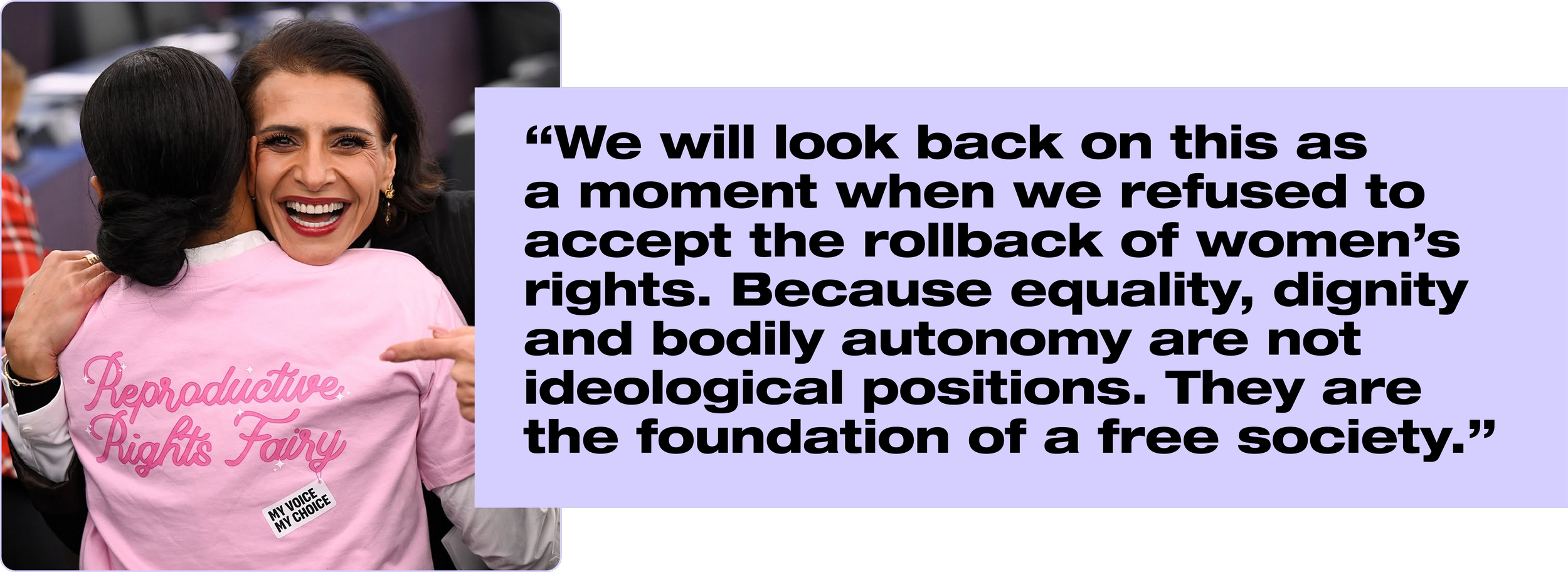
You’ve been a huge supporter of the My Voice, My Choice initiative to ensure safe and accessible abortion across Europe. It was powerful to see it pass in the European Parliament. On February 25th, the European Commission voted on My Voice, My Choice. What does it mean for people across Europe that it’s been adopted?
It is fundamentally about ensuring that access to abortion is safe and accessible across Europe.
Right now, reproductive rights depend heavily on where a woman lives and her financial situation. In some countries women have full access to reproductive healthcare, while in others they face severe restrictions or must travel abroad.
That inequality is unacceptable in a union that claims to defend fundamental rights. I am happy and proud that the initiative has gathered so much support despite the challenging political environment, and I will keep fighting until it has become reality on the ground.
When history looks back, what do you hope your feminist legacy will be?
Looking back, I hope that I have helped to revitalise a feminist movement that we did not think would be needed in 2026, but here we are. We will look back on this as a moment when we refused to accept the rollback of women’s rights. Because equality, dignity and bodily autonomy are not ideological positions. They are the foundation of a free society.